
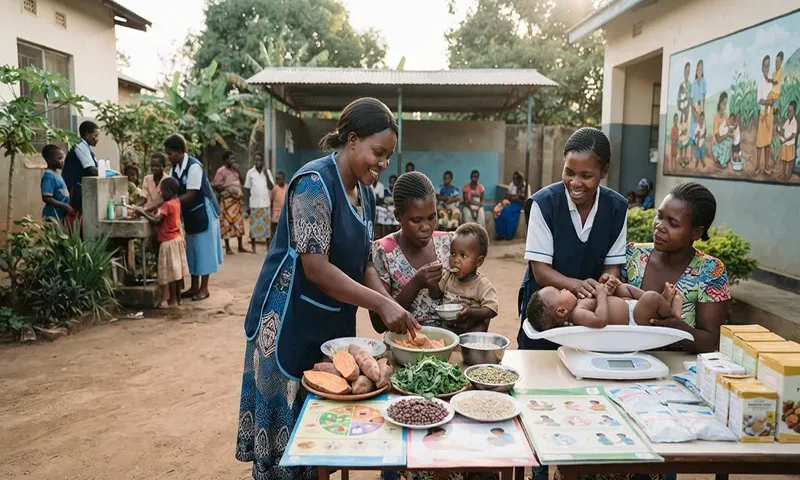
Childhood malnutrition remains one of the most critical public health challenges of our time. Far more than just a lack of food, malnutrition is a complex systemic crisis encompassing stunting, wasting, micronutrient deficiencies, and rising rates of childhood overweight. When a child suffers from poor nutrition during their formative years, the consequences extend far beyond physical growth—they permanently alter cognitive development, weaken immune defenses, and diminish lifelong economic potential.
Addressing this crisis requires moving beyond emergency food distribution toward robust, population-level public health nutrition strategies. Sustainable prevention demands a coordinated, multi-sectoral approach that tackles the root environmental, economic, and social determinants of health.
Understanding the Scope and Impact of Childhood Malnutrition
Childhood malnutrition manifests in several distinct, overlapping forms, often referred to as the “triple burden”:
- Stunting (Low Height-for-Age): Chronic undernutrition that impairs linear growth and brain development, typically occurring during the first two years of life. Stunting is largely irreversible and limits a child’s cognitive potential and future productivity.
- Wasting (Low Weight-for-Height): Acute malnutrition characterized by rapid weight loss or failure to gain weight. Wasting severely weakens the immune system and drastically increases the risk of mortality if left untreated.
- Hidden Hunger (Micronutrient Deficiencies): Deficiencies in essential vitamins and minerals—such as iron, iodine, vitamin A, and zinc—which impair immune function, energy levels, and neurological development even when calorie intake appears sufficient.
The economic toll of malnutrition is staggering, resulting in lost national productivity and immense healthcare burdens. Investing in effective prevention is not only a moral imperative but an essential economic strategy for global stability and growth.
The Critical Window: Focusing on the First 1,000 Days
The most crucial window for preventing malnutrition spans from conception until a child’s second birthday—a period of 1,000 days during which vital organ systems and neural pathways are rapidly formed. Public health interventions targeting this window yield the highest return on investment:
1. Maternal Nutrition and Prenatal Care
A child’s nutritional journey begins in utero. Public health policies must prioritize maternal health through iron and folic acid supplementation, balanced energy-protein supplementation where appropriate, and access to regular antenatal care. Preventing low birth weight lays the foundational protection against infant stunting and mortality.
2. Exclusive Breastfeeding
Promoting, protecting, and supporting exclusive breastfeeding for the first six months of life is one of the most potent public health interventions available. Breast milk provides ideal nutrition, passive immunity against infectious diseases, and strengthens the mother-infant bond. Community health worker networks play a vital role in counseling mothers and overcoming cultural barriers to early breastfeeding initiation.
3. Timely and Nutrient-Dense Complementary Feeding
Starting around six months, breast milk alone can no longer meet a child’s nutritional requirements. Public health strategies must educate caregivers on introducing diverse, nutrient-dense complementary foods—incorporating local animal-source foods, legumes, fruits, and vegetables—while continuing frequent breastfeeding up to age two and beyond.
Core Public Health Interventions at Scale
Beyond household-level education, systemic public health programs are required to protect populations at scale:
- Mass Food Fortification: Fortifying staple foods—such as flour with iron and folic acid, salt with iodine, and cooking oils with vitamin A—cost-effectively addresses micronutrient deficiencies across entire populations without requiring behavior changes.
- Targeted Micronutrient Supplementation: Periodic campaigns distributing vitamin A capsules and deworming treatments in vulnerable regions drastically reduce child mortality and morbidity.
- Integrated Management of Acute Malnutrition (IMAM): Community-based programs that train local health workers to screen for wasting and provide Ready-to-Use Therapeutic Foods (RUTF) enable children to recover safely at home before complications require hospitalization.
Cross-Sectoral Collaboration and Policy Solutions
Nutrition cannot be solved by the health sector alone. Effective strategies require bridging public health with agriculture, water, sanitation, and social protection:
- Resilient Agriculture: Promoting biodiverse farming practices ensures year-round availability of nutrient-rich crops rather than relying solely on monoculture cash crops.
- WASH Initiatives: Clean water, sanitation, and hygiene (WASH) programs are inseparable from nutrition. Repeated bouts of waterborne diarrhea destroy intestinal lining, preventing nutrient absorption and driving environmental enteropathy and stunting.
- Social Safety Nets: Conditional cash transfers and school feeding programs provide immediate economic relief to impoverished households, empowering families to purchase diverse foods and keep children in school.
Preventing childhood malnutrition demands unwavering political commitment, data-driven resource allocation, and community empowerment. By prioritizing maternal-child health during the first 1,000 days, scaling up proven interventions like fortification and education, and fostering cross-sectoral collaboration, we can dismantle the cycle of poverty and undernutrition. Securing proper nutrition for every child is the bedrock upon which healthier, more resilient, and prosperous global societies are built.

